Memorandum
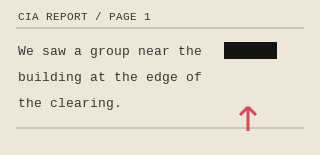
From 1978 to 1995 the US government paid people to describe places they had never seen. These are their real reports, declassified by the CIA. Each page is the original scan; the typed text under it follows the scan, the report's own spellings and all.
Experiments like these were scored by a judge who had not seen the target. The judge read each report and picked which of several targets it matched. If a report carries clues, like a word from the tasking sheet, the viewer's number, or a question from the person running the session, a judge can match it without anyone having seen anything. Critics found exactly this in the 1970s transcripts (Marks and Kammann, Nature, 1978).
This judge is a clue counter. It has read the other reports in this game. A word is a clue for an assignment when at least two of that assignment's other reports use it, at twice the share of any other kind. It counts the different clue words on the page and guesses the assignment with the most. It has never seen the page it is reading, and it is right most of the time with no psychic signal at all.
Your job is the protocol: hide the clues, keep the description. You have ink for a quarter of the page. More than that and the report no longer describes anything.
Tapping a word hides every matching mention on the page, plurals too, and every mention uses ink. A clue counts once however often it shows, so a clue that shows once is the cheapest to hide. The minimum is the real assignment's lead in clues, paid with its cheapest clues. Tap any word and the judge shows you its numbers.
Documents: the CIA STAR GATE collection in the CIA Reading Room, public domain; page images from the Internet Archive copy.